• Certified

    Certified Manufacturer

    ISO 9001:2015
  • Leading

    China's Leading

    Heating Manufacturer

Explosion-Proof Convection Heater

Hazardous-area indoor space heating

The Explosion-Proof Convection Heater provides indoor space heating for suitable hazardous areas in petroleum, chemical and pharmaceutical facilities. Cooler air enters at the bottom, warms within the heater and rises through the upper outlet, establishing natural air circulation without an open flame.

Manufactured by XGTHERMAL in China, this hazardous-area electric space heater has a published power range of 1.5–3 kW and microcontroller-based operation. Heater selection considers room heat loss, ventilation and the site’s hazardous-area classification, with an optional over-temperature alarm available for the selected configuration.

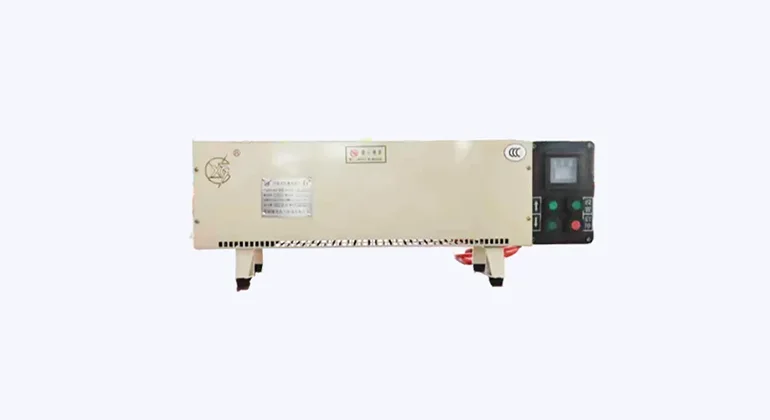
XGTHERMAL explosion-proof convection space heater with air openings and local control panel
Natural Air Convection Lower air inlet and upper warm-air outlet support room circulation
1.5–3 kW Heating Range Electric space heating for project-selected industrial rooms
Microcontroller Operation Optional over-temperature alarm for the selected configuration
Typical applications

Indoor heating for suitable hazardous industrial areas.

This product heats the surrounding room air rather than a process stream. The following applications require a match between the installation’s gas group, temperature class and ambient conditions and the selected heater’s documentation.

Petroleum facilities

Room-air heating at petroleum facilities where the heater matches the classified area.

Chemical facilities

Indoor heating applications assessed against the chemicals present and their ignition characteristics.

Pharmaceutical facilities

Suitable industrial rooms with hazardous-area requirements, subject to the final site assessment.

Cold-weather room heating

Supports the specified indoor temperature when capacity is matched to heat loss and ventilation.

Existing space-heating upgrades

An electric convection option where the existing location, supply and safety requirements are suitable.

Heating challenges

Match room heat loss with a clear convection path.

Natural circulation needs a clear air path, while the installed heating capacity must cover the room’s heat loss. Ventilation, open doors and poor insulation can increase the demand. Heater position and clearances are therefore considered alongside room size and temperature requirements.

Process challenge Room heat loss and ventilation

Walls, windows, ventilation and door opening affect the heating demand.

XGTHERMAL design focus Capacity and airflow selected together

Heater rating and position are reviewed with room conditions and the required air clearances.

Operational risk Restricted airflow or insufficient heat

Obstructed openings can impair heat distribution; inadequate capacity may leave the room below target temperature.

  • Include ventilation and infiltration in the room heat-loss assessment.
  • Keep lower air inlets and upper outlets unobstructed; do not cover the heater.
  • Provide the installation clearances and service access specified for the selected unit.
Natural-convection heater assembly for hazardous-area indoor space heating
Engineering design

Cool air enters below. Warm air rises above.

The lower inlet admits cooler room air to the heating section. As the air warms, it rises and leaves through the upper outlet, drawing more air into the heater. This natural-convection arrangement promotes circulation within the room without using a fan to drive the heating airflow.

  • Lower inlet arranged to admit cooler room air
  • Upper outlet arranged to release warm air into the room
  • Natural-convection heating airflow without a circulation fan
  • Installation location selected for unobstructed airflow and maintenance access
Operation and protection

Controlled operation for the selected hazardous area.

The published configuration uses a microcontroller, with an optional over-temperature alarm. Operating settings, alarm actions and any additional shutdown requirements are confirmed for the supplied model. The heater’s electrical protection and temperature limits must remain compatible with the hazardous-area installation.

Microcontroller-based operation

A microcontroller is listed in the standard product configuration. Available settings and operating functions are confirmed in the supplied model’s instructions.

Optional over-temperature alarm

Over-temperature alarm capability is optional. Alarm thresholds, outputs and any automatic shutdown action must be agreed for the selected configuration.

Electrical installation protection

Supply protection, grounding, cable entries and terminations are selected in accordance with the unit’s instructions and the site requirements.

Ex marking and air-path inspection

Confirm Ex db IIB T3 Gb suitability and permitted ambient conditions before installation. Inspect air openings, electrical connections and heater condition as required; operation without an open flame does not remove hazardous-area obligations.

Engineering data

Specifications

These are the published product-range parameters. Final voltage, power, alarm configuration and installation limits are confirmed for the selected model.

  • Specifications
  • Standards & Certification
  • Supply Scope
Specification Parameters Specification Details
Rated VoltageAC 220–380 V, 50 Hz (customizable)
Rated Power1.5–3 kW
Control ModeMicrocontroller
Alarm ModeOver-temperature alarm (optional)
Protection ClassIP65
Explosion-Proof GradeEx db IIB T3 Gb
Standards and Certification Area Reference / Route How XGTHERMAL Supports It
Explosion-proof design basisGB/T 3836 / IEC 60079Applicable requirements for the heater’s electrical construction, flameproof protection and hazardous-area marking.
Product specificationQ/SXGDL03-2022, BDRT seriesPublished reference for the convection-type explosion-proof electric heater family; request the selected model’s documentation.
Destination-market Ex assessmentATEX / IECEx / EACCertification routes can be reviewed for the final model and destination. These routes are not existing blanket certificates for every configuration.
Ingress protectionIEC 60529 / IP65Confirm the rated enclosure protection and installation limits in the model documentation. IP65 alone does not establish outdoor or washdown suitability for the complete installation.
Inspection and handoverModel-specific records and instructionsAgree applicable inspection records, Ex documents, alarm configuration and installation instructions before supply.

Certification availability depends on final equipment configuration, destination market requirements, hazardous-area classification and third-party conformity assessment. Standards listed here describe available engineering and documentation support, not a blanket certificate for every configuration.

Name Origin/Brand Remarks
Heater HousingShenyang Xinguang Electric Manufacturing Co., Ltd.Housing and air-path arrangement for the selected model
Heating AssemblyShenyang Xinguang Electric Manufacturing Co., Ltd.Electric heating assembly within the published 1.5–3 kW range
Electrical ComponentsDelixi, Chint or project-approved equivalentsControl and electrical components; optional alarm configuration agreed with the order
Operator references

One of China’s Top-Tier Electric Heating Suppliers for Oil & Gas Projects

XGTHERMAL has supplied electric heating systems for projects connected with CNPC / PetroChina, PipeChina and Sinopec. In China’s petroleum and petrochemical sectors, qualified heater suppliers must pass technical review, explosion-proof compliance checks, safety documentation review and field performance verification.

This project record places XGTHERMAL among the specialist electric heating manufacturers trusted for demanding oil and gas applications. Redacted cooperation records, contract references or project supporting materials can be provided for qualified procurement discussions.

Custom engineering

Custom engineering around your operating conditions.

Share the room layout, required indoor temperature, ambient conditions and hazardous-area requirements. XGTHERMAL can review the heating capacity, installation position, electrical supply and documentation needed for the project.

  • Heating duty Room heat loss, target indoor temperature and operating schedule.
  • Mechanical interface Room layout, installation position, airflow clearance and service access.
  • Site safety Hazardous-area classification, IP protection, grounding and interlock requirements.
  • Electrical interface Supply voltage, cable route and any additional monitoring requirements.
Sizing & RFQ Guidance

Help us select your convection heater.

Selection starts with room heat loss, ventilation and the required indoor temperature. Room dimensions alone are not sufficient to select a rating. If a heat-loss calculation is unavailable, provide the construction, insulation and ventilation information so our team can review the duty.

  • Room use, dimensions and ceiling height
  • Target indoor temperature and design outdoor temperature
  • Wall, roof, window and insulation details
  • Ventilation rate and typical door-opening conditions
  • Available room heat-loss calculation, if any
  • Hazardous-area classification, gas group and temperature class
  • Proposed heater positions and available clearances
  • Supply voltage, frequency and available electrical capacity
  • Operating schedule and alarm requirements
  • Destination-market documentation and required quantity
Technical FAQ

Common engineering questions.

Does this heater warm the room or a process fluid?

It is an electric space heater: it warms the surrounding room air through natural convection. It is not an in-line heater for crude oil or natural gas, and it is not designed to heat air flowing through a process duct.

What other names describe this product?

Buyers may describe it as an explosion-proof convector, hazardous-area convection heater or explosion-proof electric space heater. These terms describe room-air heating. The natural-convection design differs from a fan-forced air heater.

Does it use a fan to circulate the heating air?

The heating airflow is produced by natural convection, not by a fan. Cooler air enters below and warm air exits above. Keep the inlet and outlet clear and observe the specified installation orientation and clearances.

What room size can a 1.5–3 kW heater serve?

The published range is 1.5–3 kW. The area it can serve depends on insulation, ceiling height, ventilation, outdoor design temperature and the required indoor temperature. A heat-loss assessment is needed; a universal square-metre rating would not represent every room.

Do you manufacture explosion-proof convection heaters in China?

Yes. XGTHERMAL is a China-based manufacturer of explosion-proof convection heaters and industrial electric heating equipment. We support selection and project documentation for overseas petroleum, chemical and other suitable industrial installations.

Is it suitable for every hazardous area?

The published marking is Ex db IIB T3 Gb. Suitability must be checked against the site classification and the exact unit’s certificate and instructions. This marking does not establish suitability for every gas group or combustible-dust area. Destination-specific certification routes can be reviewed during procurement.

Request the convection heater datasheet

Share your operating conditions and our team can provide a project-specific datasheet or preliminary selection notes.

Request Datasheet

Have a project requirement or need a custom heating solution?
Contact XGTHERMAL for technical support, OEM service, or a quotation.