Pressure-reduction preheating
Adds heat before regulation to help maintain the required downstream gas temperature.

ISO-Certified Manufacturer
ISO 9001 · 14001 · 45001Electric Heating Expertise
Manufacturing Since 1992Thermal-oil indirect heating for pipeline stations, pressure regulation and cold-region gas transmission.
An indirect electric natural gas line heater for pipeline offtake, pressure-regulating and gas-delivery stations. Electric heating elements heat an intermediate thermal-oil medium, which transfers heat to the gas across a separate pressure boundary.
We review your station conditions and equipment specification, then coordinate gas-side pressure design, thermal-oil limits, instruments and control interfaces. Explosion-proof configurations are selected against the site’s hazardous-area requirements.
Discuss Your Requirements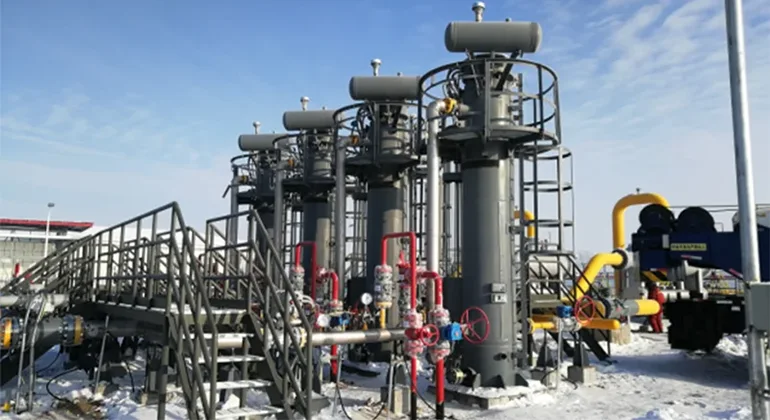
Temperature compensation before pressure regulation.
Thermal oil separates the gas from the heating elements.
Heater, instruments and controls within the agreed scope.
Heating duty depends on gas properties, flow, the station pressure profile and the minimum acceptable downstream temperature.
Adds heat before regulation to help maintain the required downstream gas temperature.
Controlled gas heating at branch lines, delivery points and station interfaces.
Temperature compensation for exposed stations and winter operation.
New or replacement equipment configured around existing process and electrical interfaces.
Natural gas can cool during pressure reduction. Under suitable pressure, temperature and moisture conditions, this can create hydrate or icing risks. Selection therefore considers the minimum required temperature after regulation, rather than only the heater outlet setpoint.
The electric elements heat the thermal oil; heat then crosses the gas-side pressure boundary into the flowing gas. Gas temperature, thermal-oil temperature and operating level are monitored independently. This indirect arrangement must be reviewed as a complete system.
Gas outlet-temperature feedback regulates heat input against the station setpoint.
Stepless power adjustment matched to changing heating duty.
Low gas flow or insufficient thermal-oil level can inhibit heating and initiate an alarm or shutdown.
High-temperature protection and station emergency-stop signals interrupt heater power; additional interlocks are defined by project.
Published options provide a starting point. Final values and certification requirements are confirmed for your project.
| Specification Parameters | Specification Details |
|---|---|
| Rated Voltage | AC 380 V, 50 Hz (customizable) |
| Rated Power | Up to 3000 kW |
| Inlet/Outlet Specification | Custom flange / nozzle sizes |
| Control Mode | PLC / microcontroller / digital controller (optional) |
| Alarm Mode | Over-temperature, over-pressure, low gas flow, low oil level and electrical faults |
| Design Pressure | 0–45 MPa (gas side) |
| Control Cabinet | Explosion-proof / non-explosion-proof |
| Protection Class | IP65 |
| Explosion-Proof Grade | Exdb IIB T1~T6Gb Exdb IIC T1~T6Gb |
| Standards and Certification Area | Reference / Route | How XGTHERMAL Supports It |
|---|---|---|
| Explosion-proof design basis | IEC 60079 / GB/T 3836 | Design reference for explosion-proof heater body, terminal box and hazardous-area electrical details. |
| EU / international Ex certification | ATEX / IECEx | Project-specific certification route can be supported when required by the destination market and final hazardous-area classification. |
| Eurasian market access | EAC / TR CU 012/2011 | Certification and technical documentation support can be coordinated for Russia, Kazakhstan and other EAEU destinations. |
| Oil & gas procurement documents | IOGP JIP33 S-723 Electrical Process Heaters | JIP33-aligned data sheets, inspection and test plans, vendor document register and technical query response can be prepared for EPC review. |
| Pressure boundary | ASME BPVC Section VIII / PED 2014/68/EU | Pressure design, material traceability, welding records and third-party review can be supported when the heater body is within project pressure-equipment scope. |
| Electrical cabinet and machine safety | IEC 61439 / IEC 60204-1 | Control cabinet layout, component selection, wiring practice and electrical protection can be configured around project requirements. |
| Functional safety | IEC 61511 / SIL | SIL-rated safety loop design can be coordinated when independent shutdown or safety instrumented functions are specified. |
| Sour service materials | ISO 15156 / NACE MR0175 | Gas-wetted materials can be reviewed for H 2 S-containing service within the applicable standard and project scope. |
| Inspection and handover package | EN 10204 3.1, NDT reports and FAT records | Material certificates, pressure test records, non-destructive testing reports, electrical test records and factory acceptance test files can be supplied. |
| Ingress protection | IEC 60529 | IP65 / IP66 enclosure protection can be selected for outdoor oilfield stations and harsh operating environments. |
Certification availability depends on the final equipment configuration, destination market, hazardous-area classification and third-party assessment. Listed standards describe engineering and documentation support, not blanket certification for every configuration.
| Name | Origin/Brand | Remarks |
|---|---|---|
| Heater Body | Shenyang Xinguang Electric Manufacturing Co., Ltd. | Pressure boundary and process connection customized by project |
| Heating Element | Shenyang Xinguang Electric Manufacturing Co., Ltd. | Surface heat load selected for the thermal oil and heating duty |
| Control Cabinet | Shenyang Xinguang Electric Manufacturing Co., Ltd. | Explosion-proof or safe-area cabinet available |
| Electrical Components | Delixi, Chint or project-approved equivalents | PLC, circuit breaker, contactor, thyristor, relay and isolating barrier options |
| Instruments | Chuanyi, Anhui Tiankang, Beijing Tiantai or project-approved equivalents | Gas temperature and flow, thermal-oil temperature and level, and pressure monitoring |
Start with gas composition, flow and upstream / downstream regulator pressures. The required heater outlet temperature comes from the station process calculation and the minimum acceptable downstream temperature.
Send your station datasheet, process calculation, equipment specification or drawings. Flow quoted in Nm³/h or Sm³/h needs its stated reference conditions; a simple liquid-flow estimate cannot establish pressure-reduction cooling or hydrate limits.
A line heater describes a pipeline heating application, while a circulation heater heats a flowing process stream. These terms alone do not specify the heat-transfer arrangement. This natural gas line heater uses thermal-oil indirect heating, keeping the gas separate from the electric heating elements.
XGTHERMAL generally uses indirect heating for natural gas pipeline and pressure-reduction duties to keep the process gas separate from the electric heating elements. In this Natural Gas Line Heater, the elements heat an intermediate thermal-oil medium, which transfers heat to the gas across a separate process boundary. Final configuration and heating duty are selected according to operating pressure, gas flow, inlet and required outlet temperature, gas composition, ambient conditions and project requirements.
The setpoint is based on gas composition, moisture, flow, upstream and downstream pressures, and the minimum temperature required after regulation. There is no single temperature setting that prevents hydrates for every gas stream.
The heater can be supplied with insulation, instruments, junction boxes and a control cabinet. Skid-mounted piping and valves, or separately located indoor controls, can be configured to suit the station layout and hazardous-area classification.
Yes. XGTHERMAL is a China-based manufacturer of natural gas electric heaters and engineered gas-heating packages for pipeline transmission and pressure-regulating stations. We support customized design, engineering documentation and export-oriented technical coordination for overseas procurement.
Project documentation can be prepared around IEC 60079 / GB/T 3836 hazardous-area requirements, NDT, material certificates, FAT records and, where required, project-specific ATEX, IECEx, EAC or JIP33 alignment discussions.
Manufacturing since 1992, with 120+ projects delivered and longstanding supply relationships with CNPC, Sinopec and PipeChina.
Review Our CapabilitiesAgree the inspection and handover scope during technical review: material certificates, pressure-test and NDT records, electrical testing, FAT and final documentation as specified.
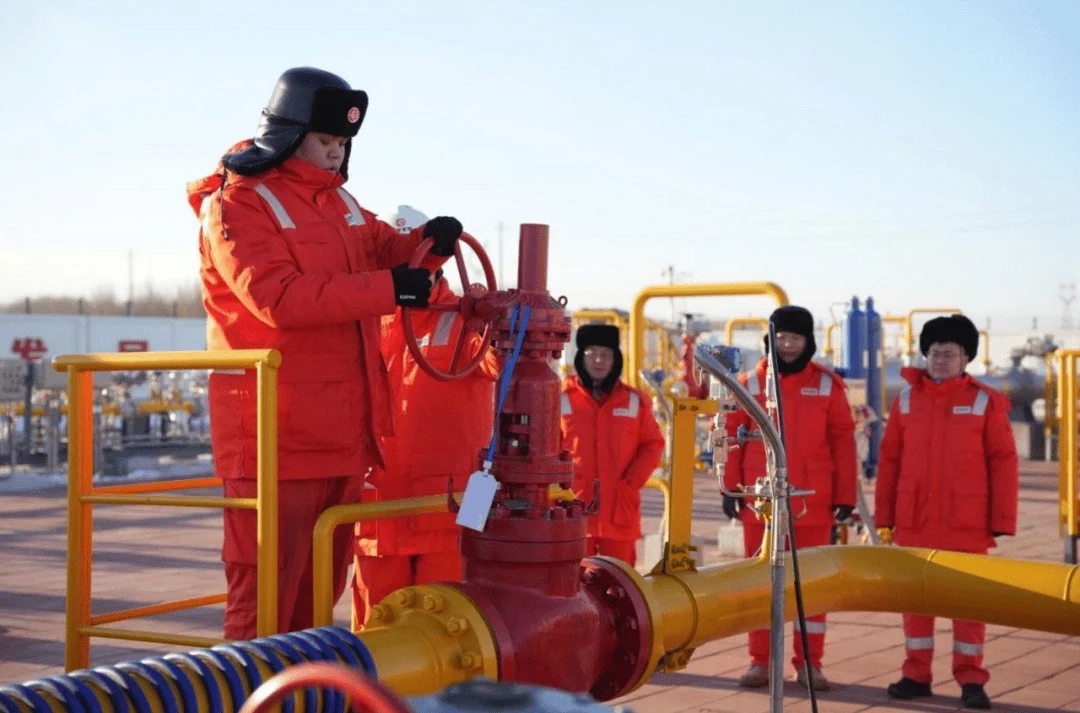
Horizontal indirect thermal-oil electric heating packages for three cold-climate pipeline stations. Outdoor heaters, indoor control cabinets and remote station interfaces support cold-region natural gas service.
View Project DetailsShare your process conditions, drawings and delivery requirements.