Multiple Phases
Oil, gas and produced water may coexist, with phase fractions that vary across the operating envelope.
 +86 13080774668
 contact@xgthermal.com
 Mon-Fri 9:00-18:00 UTC+8

Certified Manufacturer
ISO 9001:2015
China's Leading
Heating ManufacturerEngineered electric heating solutions for oilfield wellstreams containing oil, gas and produced water, designed around fluid composition, pressure, temperature and downstream process requirements.
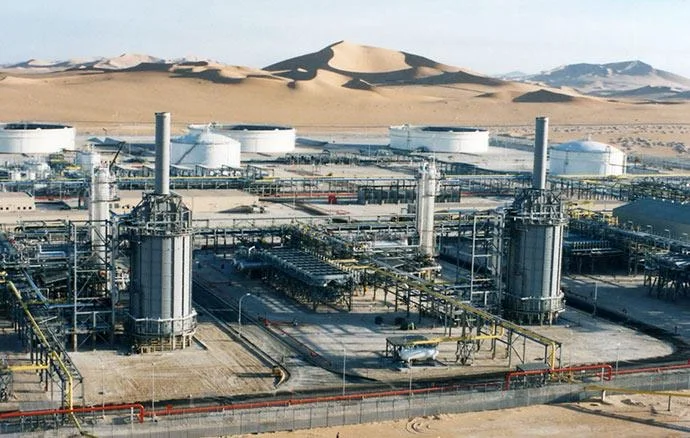
Oilfield production fluids may contain oil, natural gas and produced water in changing proportions. Each phase has different thermal and flow properties; the mixture can also change with pressure, temperature and production history.
Multiphase wellstream heating therefore requires more than a single nominal viscosity or fluid temperature.
Oil, gas and produced water may coexist, with phase fractions that vary across the operating envelope.
Density, viscosity, heat capacity and phase behavior depend on composition and operating conditions.
Concerns may include increased oil viscosity, wax deposition tendency or phase changes. Hydrate risk depends on gas composition, available water, pressure and temperature.
Heating may be needed at selected points in production and gathering to meet a defined process temperature. Not every wellhead or pressure-reduction duty requires additional heat.
Condition production fluids as they enter surface facilities, where required by the operating conditions.
Maintain required temperature through gathering piping, manifolds or associated equipment.
Condition the wellstream before separation or treatment to meet downstream process requirements.
Preheat before choke valves where temperature change and phase behavior warrant it.
Maintain a specified process temperature before transfer or further processing.
Define the wellstream and its operating envelope first. The composition, process conditions and heating objective guide the choice of architecture—not a preferred heater model.
Select the heat-transfer arrangement after the duty and process conditions are understood.
Start with the fluid and process condition—not the heater.
Conceptual composition-to-selection guide. Oil, gas and produced water are shown as constituents of one wellstream, not separate equipment feeds or an instruction to mix them. The evaluation may be iterative.
A sensible-heating estimate can be a starting point under suitable assumptions. Final sizing must account for the actual phases, operating envelope and required process outcome.
Q: kW · ṁ: kg/s · Cp: kJ/(kg·K) · ΔT: K
A starting relationship, not a multiphase sizing method. One fixed heat capacity cannot automatically represent an oil–gas–water stream. Where phase change is material, a phase-aware enthalpy balance and suitable fluid-property data may be required.
Oil, gas and water proportions, with relevant thermophysical properties at the stated conditions.
Flow, pressure, inlet and required outlet temperature, including the operating range.
Possible phase change, pressure-related temperature effects, and hydrate or wax behavior where relevant.
Heat transferred from piping and equipment to the surrounding environment.
The temperature needed for downstream separation, pressure reduction, transfer or flowability.
Heater sizing may also need startup and transient cases. This page does not calculate phase equilibrium, hydrate conditions or a generic effective heat capacity.
These two verified application routes address different duties. A high-pressure gas-containing wellstream and a water-cut crude-oil stream should not be treated as interchangeable heater specifications.
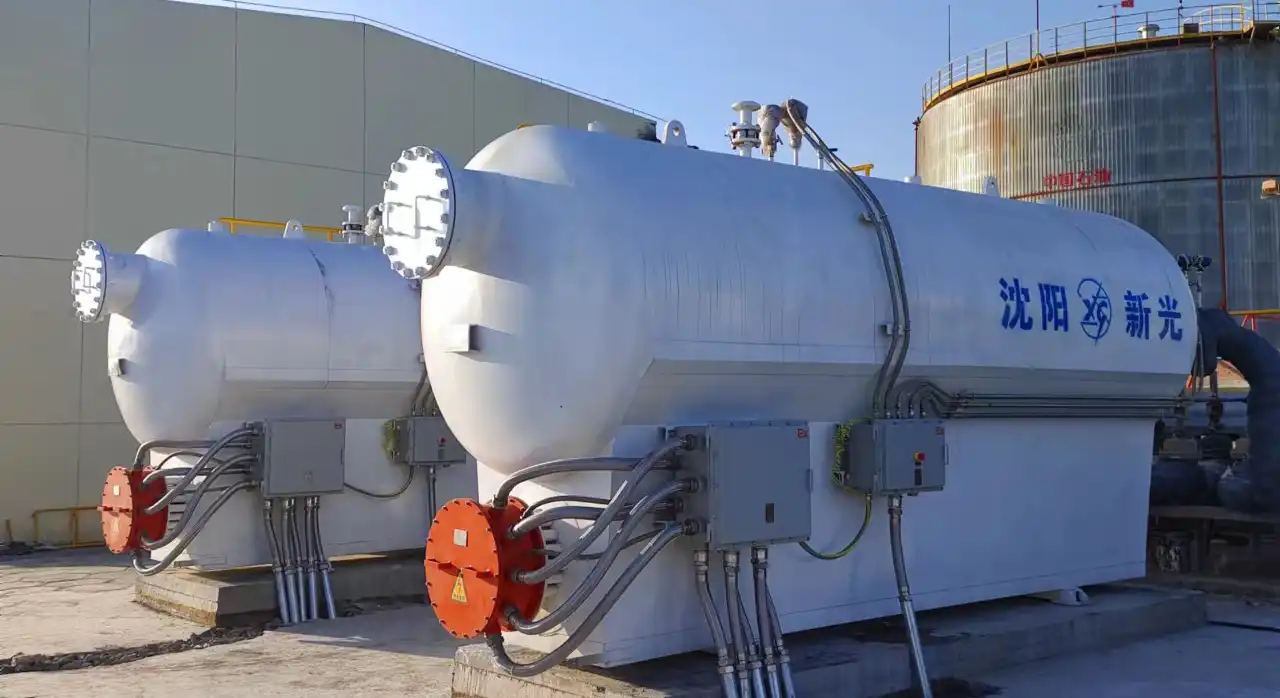
Electric elements heat an intermediate medium. Vapor transfers heat to a separate process coil, condenses and returns to the liquid phase.
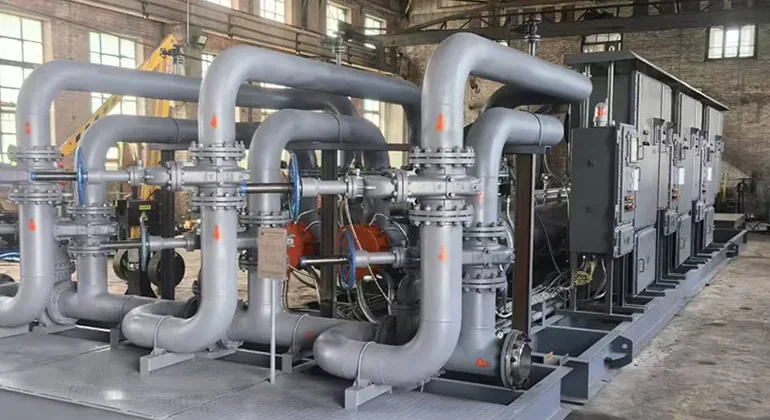
An electromagnetic field heats a metal heat-transfer structure, which transfers heat to the process fluid.
Two project references with distinct fluid and pressure conditions: a gas-containing wellstream and a water-cut crude-oil application.

Vacuum phase-change indirect heating of a produced gas, crude-oil and water mixture upstream of choke-valve pressure reduction.
Image: CCTV-13 news context from the existing case study; it does not identify XGTHERMAL’s heater body.
View Jidong Project
Electromagnetic heating for water-cut crude oil in an outdoor desert and cold-winter setting, supporting the temperature requirements of oilfield gathering and transfer.
A produced-liquid application reference, not proof that all gas–oil–water mixtures can use the same configuration.
View Xinjiang ProjectShare the information you have. Not every item is required for an initial inquiry; more complete process data helps us make a more reliable engineering evaluation and identify any remaining inputs.
Some heating systems can be engineered for multiphase service. Suitability depends on the phase composition, pressure, temperature, flow, phase behavior and equipment architecture. A heater specified for a liquid duty should not be assumed to accept any gas fraction. Define the expected operating envelope before selecting a configuration.
Water cut influences mixture properties and the heat required for a given temperature change. It can also affect flow and heat-transfer behavior. The engineering review considers how water cut varies, the reporting basis, fluid properties and process objectives. Water chemistry, solids or phase-related concerns may require attention where applicable; high water cut is not automatically unsafe.
An indirect architecture separates the process stream from the electric heating elements through an intermediate heat-transfer medium and a process boundary. This arrangement may suit certain high-pressure or complex wellstream duties. XGTHERMAL’s vacuum phase-change product has a Jidong gas-storage reference for gas, oil and water heating before pressure reduction. Indirect heating is not universally preferable for every fluid or operating condition.
Pressure reduction can lower the temperature of a gas-containing wellstream, depending on composition and operating conditions. Preheating upstream of a choke valve may be used where necessary to meet a downstream temperature requirement or manage applicable phase-related operating concerns. The temperature change is not a universal fixed value, and heating alone does not guarantee that hydrates or wax deposits cannot form.
Under suitable sensible-heating assumptions, Q ≈ ṁ × Cₚ × ΔT is a useful starting relationship. Final design may require phase-specific properties or an enthalpy balance, the operating envelope, pressure effects, possible phase changes, heat losses and downstream requirements. A single assumed heat capacity is not sufficient to size every multiphase heater; this page does not provide a multiphase sizing calculator.
Start with oil, gas and water proportions, available fluid-property data, flow rates, operating and design pressure, and inlet and required outlet temperature. Describe upstream and downstream equipment, ambient conditions, available power and any hazardous-area requirements. The engineering data checklist outlines useful inputs; send what is available so we can help clarify the rest.
Share your wellstream composition, operating conditions and heating objective. XGTHERMAL can evaluate the duty and recommend an appropriate heating architecture for the application.
