Steam-Heated Process Duties
Evaluate existing steam heat exchangers, coils or other steam-heated duties for a suitable electric alternative.
 +86 13080774668
 contact@xgthermal.com
 Mon-Fri 9:00-18:00 UTC+8

Certified Manufacturer
ISO 9001:2015
China's Leading
Heating ManufacturerEngineered electric heating solutions for industrial process duties, supporting the transition from conventional steam or fuel-based heating where electrification is technically and operationally appropriate.
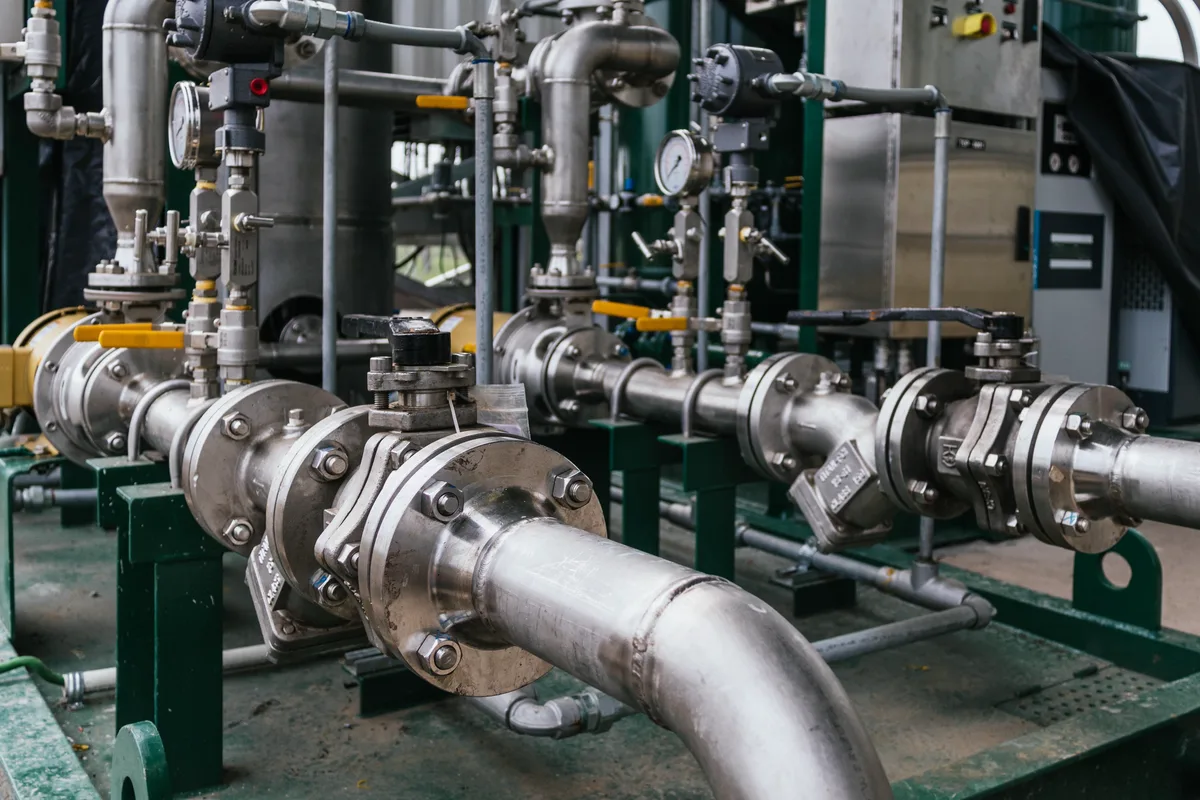
Moving from steam or fuel-based heating to electric process heating is not necessarily a one-for-one equipment substitution. The new arrangement must meet the process duty and integrate with the available electrical supply, equipment and operating philosophy.
Normal, peak and startup conditions may lead to different requirements. Existing utilities, process interfaces and protection functions need review before the heating architecture is selected.
Normal, peak and startup duty, and the required process temperature.
Available voltage, site power, transformer capacity, switchgear and distribution constraints.
Existing piping, equipment configuration, process interfaces and installation constraints.
Temperature protection, applicable process interlocks, hazardous-area requirements and control-system integration.
These are potential candidates for assessment, not automatic equipment selections.
Evaluate existing steam heat exchangers, coils or other steam-heated duties for a suitable electric alternative.
Review selected combustion-heated processes where direct or indirect electric heating may be practical.
Consider sites where a separate steam utility is undesirable or impractical, while checking electrical availability.
Integrate electric heating with controls and compatible process equipment in a packaged system.
Review heating systems being replaced or upgraded for operating, maintenance, control or project requirements.
Not every process-heating duty is an appropriate candidate for electrification. Required temperature, duty, process conditions, available power, operating profile, existing utilities, integration constraints and project economics all affect suitability.
Electrification involves re-engineering how heat is generated, controlled, protected and integrated into the process. Start with the existing duty and design an appropriate replacement arrangement.
An illustrative conventional arrangement. Actual heat-generation and distribution paths vary by site.
Review transformer, switchgear and cable capacity, existing utilities and installation constraints. Temperature, flow and pressure protection are selected where applicable.
Control links are not heat-flow paths. Power regulation and remote integration depend on the selected configuration.
Not a one-for-one equipment substitution: define the process, electrical, control and protection changes together.
Technical feasibility is project-specific. Use these five areas to identify constraints and the information needed for an electrification study.
This is an engineering review matrix, not a scoring tool. Economics also depend on electricity and fuel or steam prices, infrastructure investment, utilization and the operating profile.
Heat generation and heat-transfer arrangement are separate design choices. These families can overlap: a resistance-powered heater may transfer heat directly to a process stream or through an intermediate medium. Selection remains specific to the process and project.
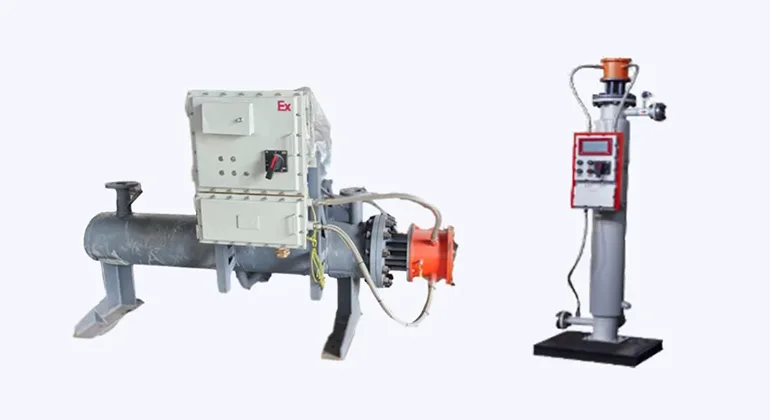
Electrical power → resistance elements → heat transfer → fluid
Resistance heating can serve a flowing process stream or an intermediate circuit. The fluid path and heat-transfer boundary must be checked for the selected product.
Continuous-flow crude-oil process heating.
Heated circulating water for compatible tank coils or radiators; not direct crude-oil heating.
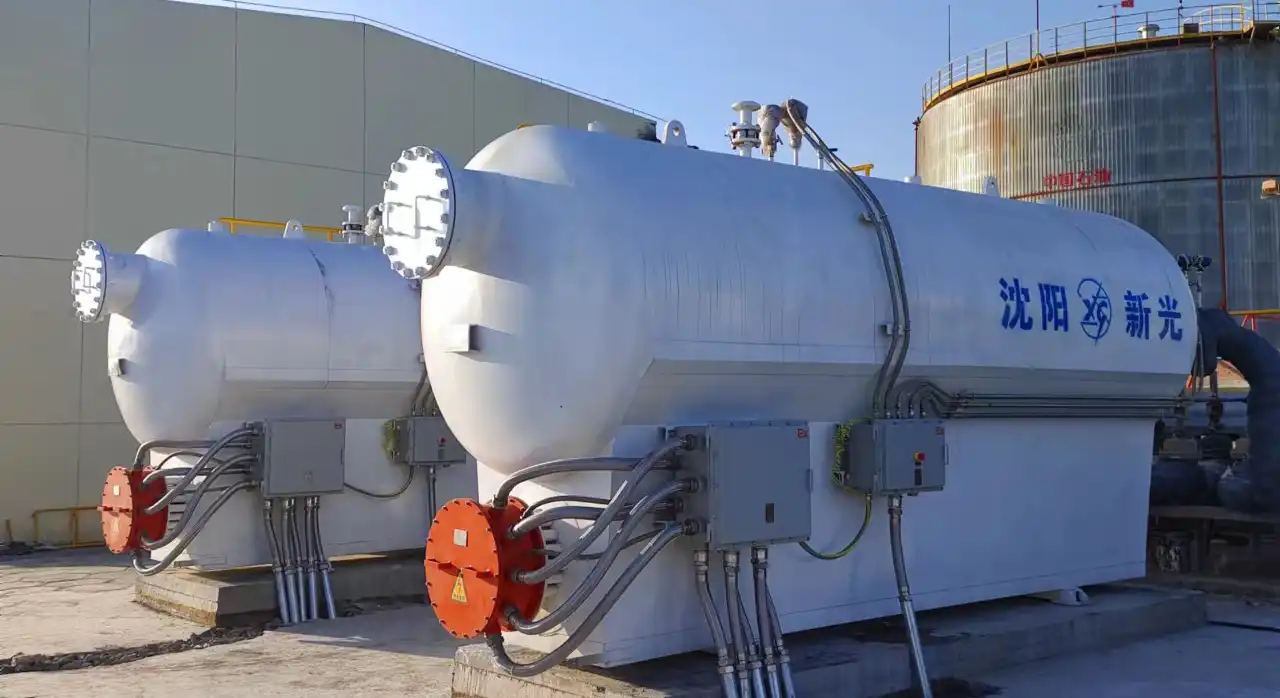
Electrical power → intermediate medium → process boundary → fluid
An indirect arrangement may suit process-separation or heat-transfer requirements. Phase-change and thermal-oil routes have different operating conditions; neither is universally preferred.
Heat transferred through an intermediate phase-change mechanism.
Thermal-oil indirect heating; process gas remains separated from the electric elements.
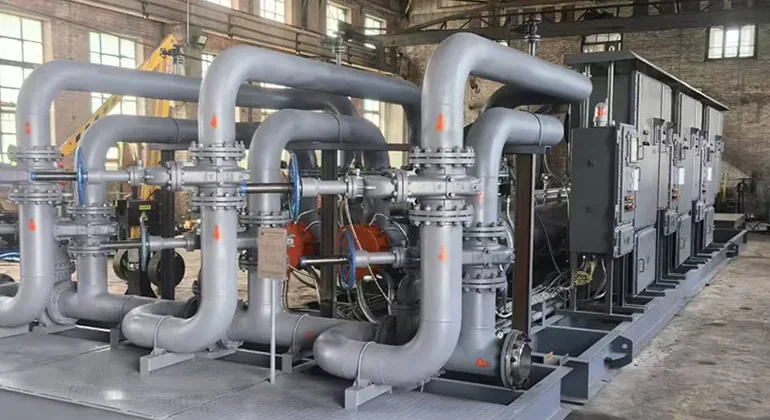
Electrical power → electromagnetic field → heated metal → fluid
An electromagnetic field heats a metal heat-transfer structure, which transfers heat to the process fluid. Induction is a heating method, not a guarantee of lower energy use.
Return-flow process heating for selected crude-oil and produced-fluid duties.
One reference documents steam-to-electric replacement; the other demonstrates an electric process-heating application. Their scopes should not be treated as identical retrofit evidence.
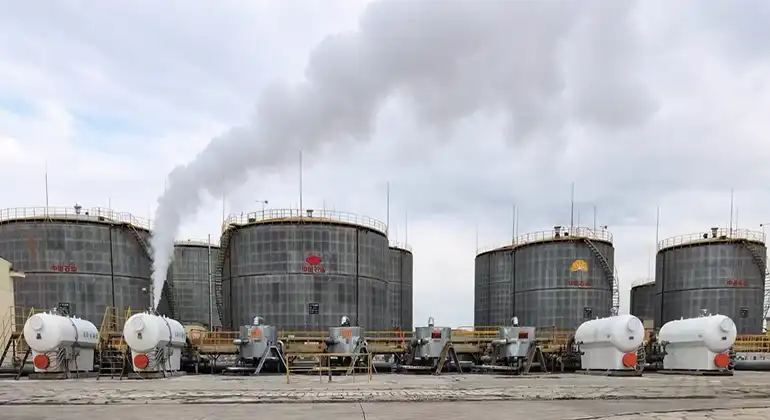
The existing project material documents replacement of steam heating with vacuum phase-change electric heating for oilfield gathering and production-fluid duties in a desert and cold-winter environment.
View Xingang Project
A 600 kW electromagnetic heating package for water-cut crude oil at an outdoor oilfield transfer station, including winter operating conditions. This reference demonstrates electric heating in service, not a verified replacement of a prior fuel or steam system.
View Xinjiang ProjectWhat heating system exists today, and what must its replacement accomplish? Share the information you have about the current installation and process duty; XGTHERMAL can help clarify the remaining inputs.
Process heating electrification is the transition from an existing steam, fuel-fired or other conventional heating arrangement to an electric heating system. It includes evaluating the heating duty, electrical infrastructure, process interfaces, controls and protection—not just changing the energy source.
An electric alternative may be suitable for some steam-heated duties, but it is not necessarily a direct equipment replacement. Required temperature, duty, fluid properties, pressure boundary, existing heat-transfer surfaces and electrical capacity must be reviewed. The selected solution may retain an intermediate circuit or require changes to the piping, equipment and controls.
It may be practical for selected duties where temperature, heating capacity, available power and site conditions support the change. Direct or indirect heat transfer may be considered according to the process. Removal of a burner does not remove the need for process protection, hazardous-area design or an operating-case review.
The assessment checks available voltage and frequency, site electrical capacity, transformers, switchgear, distribution and cable capacity. Starting behavior, load profile, power regulation and protection are reviewed for the selected design. A site may need electrical upgrades; the scope cannot be determined from heater rated power alone.
Electric heating can reduce certain combustion and heat-distribution losses in suitable applications and provide controllable heat delivery. Equipment-level electrical-to-heat conversion is not the same as whole-system or primary-energy efficiency. Overall efficiency depends on the existing system, electricity supply, operating profile and site conditions. Operating cost also depends on energy prices, infrastructure investment and utilization. Avoiding local combustion does not by itself establish lower total emissions; electricity generation must also be considered.
Some equipment can be retained or adapted, while other installations require a redesigned heating arrangement. Feasibility depends on process duty, available electrical capacity, piping and equipment configuration, installation space, control architecture, hazardous-area requirements and shutdown constraints. Existing drawings and operating information help define the retrofit scope.
Share your process requirements, existing heating system and site conditions. XGTHERMAL can help evaluate the feasibility of electrification and develop an appropriate electric heating solution.
