Thermal equipment
Insulated electric heater with tubular elements, shell-and-tube gas exchanger and an initial thermal oil fill.

ISO-Certified Manufacturer
ISO 9001 · 14001 · 45001Electric Heating Expertise
Manufacturing Since 1992Two 600 kW indirect electric heating skids supply heat for molecular sieve regeneration at a natural gas processing facility in Xinjiang, China.
The project configuration below summarizes the supplied equipment and its process application.
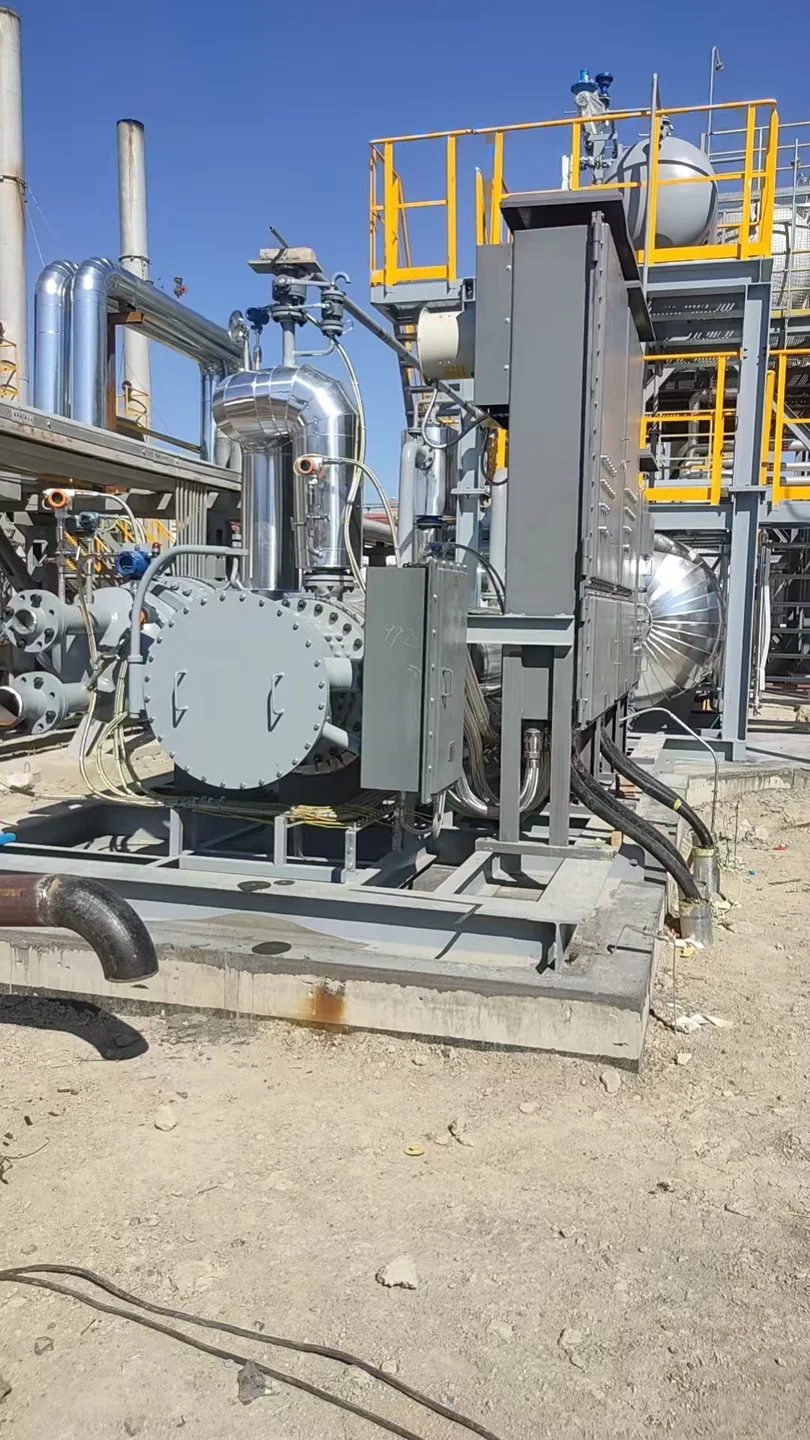
The gas dehydration unit required regeneration gas to be heated from 50 °C to 230–240 °C. The heating system also had to accommodate outdoor winter conditions and changes in load across the regeneration cycle.
The project used two 600 kW skids in a common installation area. The two-train arrangement gives operators the option of duty/standby or parallel operation, depending on the heating demand.
Equipment capacities, interfaces and controls are matched to the project application.
The integration and handover scope documented for this project.
Insulated electric heater with tubular elements, shell-and-tube gas exchanger and an initial thermal oil fill.
Air-cooled horizontal centrifugal pump, nitrogen-blanketed expansion vessel, and an access platform with stairs.
PLC cabinet with a 10-inch touchscreen, Pt100 temperature sensing, pressure transmitters and a magnetostrictive level transmitter.
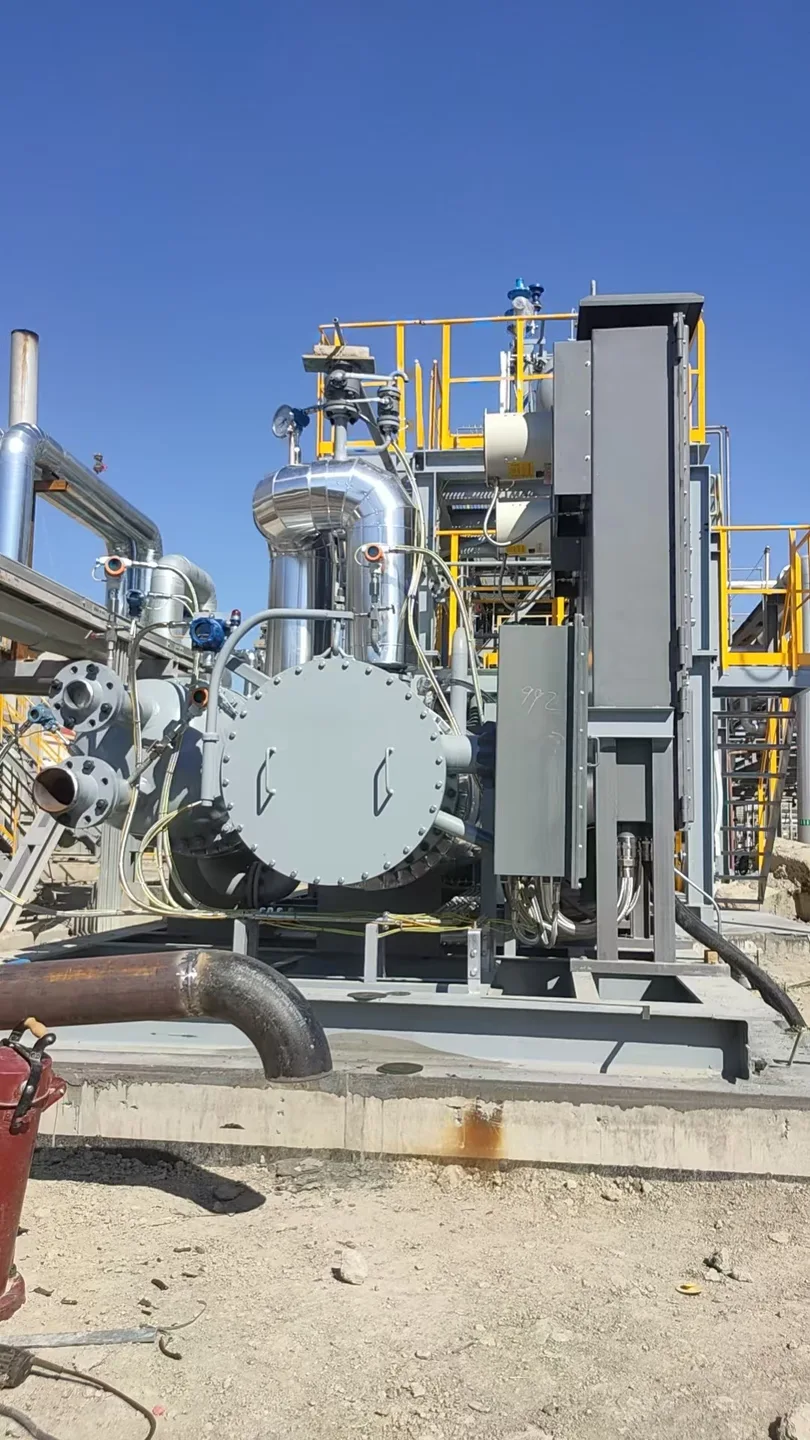
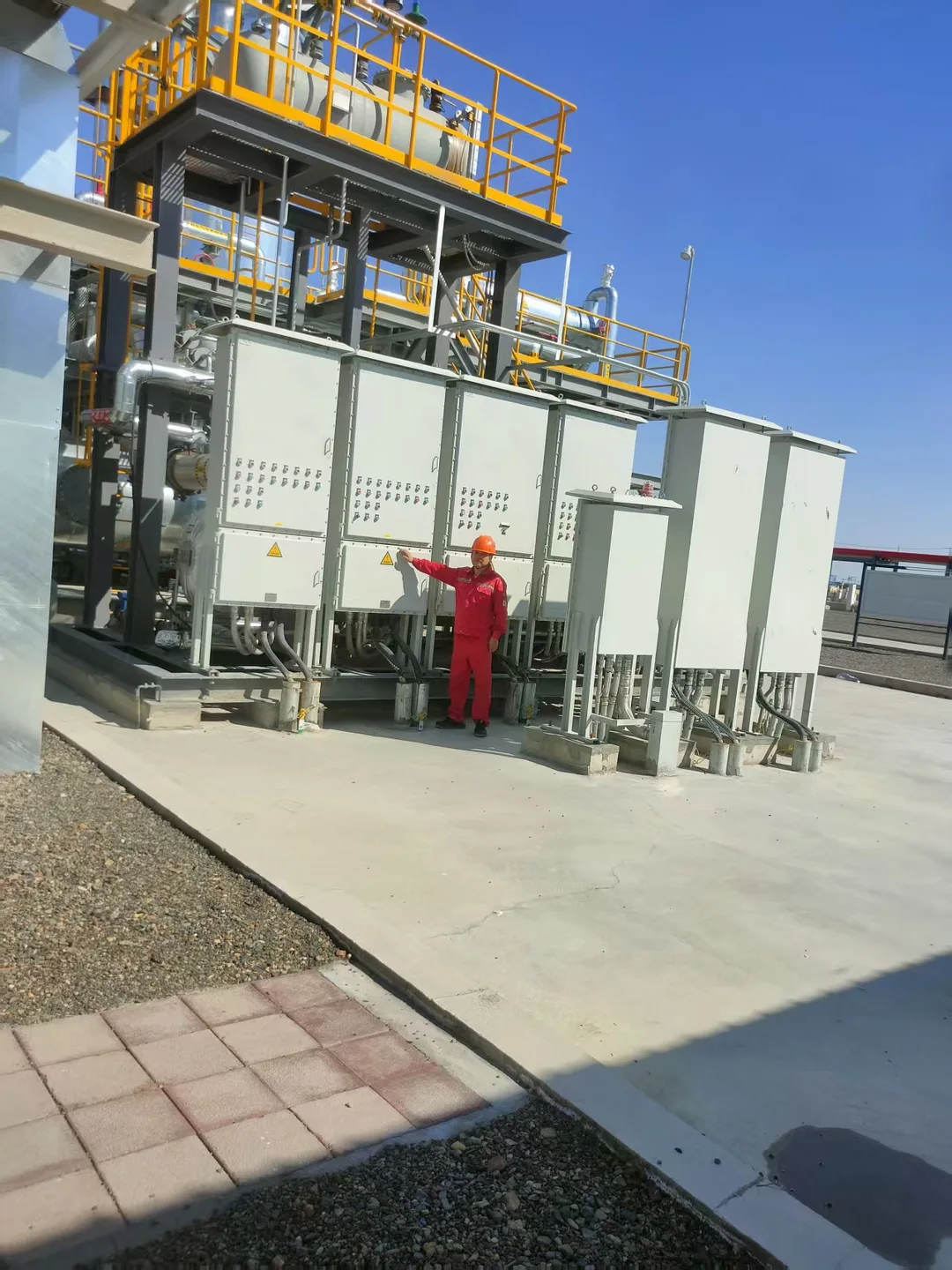
Flow, efficiency, load range, temperature control accuracy and design life are values listed in the project specification.
| Parameter | Specification |
|---|---|
| Equipment tags | F-101 / F-102 (two units) |
| Rated power | 600 kW per unit (1,200 kW total) |
| Process medium | Molecular sieve regeneration gas (natural gas) |
| Gas flow per unit | 2,600 m³/h |
| Gas inlet temperature | 50 °C |
| Gas outlet temperature | 230–240 °C |
| Process gas operating pressure | 2.8–4.0 MPa(g) |
| Gas-side exchanger design pressure | 4.0 MPa |
| Process connections | DN100 |
| Heating method | Electric resistance heating with an indirect thermal oil circulation loop |
| Specified thermal efficiency | ≥95% |
| Specified load range | 20–120% |
| Specified temperature control accuracy | ±2 °C |
| Explosion protection | Ex d IIB T4 |
| Ingress protection | IP65 |
| Power supply | 380 VAC / 50 Hz |
| Control system | PLC, 10-inch touchscreen and Modbus RTU/TCP |
| Project ambient temperature range | −35.9 to 42.9 °C |
| Design life | 20 years |
Tubular electric elements heat the thermal oil. The circulation pump sends the oil to a shell-and-tube exchanger, where the regeneration gas absorbs heat on the tube side before flowing to the molecular sieve beds.
The PLC adjusts output using gas outlet temperature feedback. The project specification also lists remote start and stop, overtemperature shutdown and automatic cold-weather protection.
The installation uses cabinet heaters, instrument freeze protection and electric tracing on drain lines. The specified ambient range extends down to −35.9 °C.
The duty/standby or parallel arrangement gives the operator flexibility to stage the available heating capacity and isolate a train for service when the process demand permits.
The thermal, electrical and control systems were preassembled and checked at the factory. Site work focused on connecting the skids to plant piping, power and controls.
Share your specifications or drawings with our engineering team.